When Gore Meets Guffaws: What Makes a Horror-Comedy Tick?
This article was originally published in HorrorPress.
Horror and comedy are like the angelic central heroine and her evil parasitic twin from 2021’s Malignant: they may seem diametrically opposed, but they’re more related than they might first appear- and when they share the same body, they can cause unforgettable mayhem. The hybrid genre of horror-comedy was once considered box office poison: in the 2000s, Shaun of the Dead served as the rare example of a profitable horror-comedy, while oddities like Slither and Teeth floundered.
Horror-Comedy Was Once Considered Box Office Poison
Analysts at the time noted the high degree of difficulty involved in conjoining the genres: too much comedy could sap horror of its tension, while too much horror would spoil the comedy. Mainstream audiences at the turn of the century also had few popular references for horror-comedies, meaning that more innovative attempts at fusing the two genres caused confusion and distaste.
Today, a new landscape has emerged: horror-comedy is seen as one of the few sure bets to get butts into theater seats, as evidenced by recent hits including Weapons and Send Help. As horror-comedy continues its cultural dominance, it’s worth asking a fundamental question: what exactly makes something a horror-comedy? And what are the tactics filmmakers use to blend the two genres?
Defining Horror-Comedy
Not all horror-comedies are created equal: the laugh-to-scare ratio of American Psycho could not be further from that of, say, Scary Movie. We can examine horror-comedies through two lenses: behavior and universe. That is, does a film depict character behavior as comedic or horrific? Does it depict its overall universe – the outcomes and cosmic forces that govern the movie – as comedic or horrific? (Technically, we could add a third lens – events – but by definition, every horror-comedy must have horrific events, otherwise it wouldn’t be horror at all. Consider: even the events of Scary Movie are horrific, as they depict stabbings and murders, slapstick as they are in nature.) We can then group horror-comedies into the three lanes.
Comedic Behavior, Comedic Universe: When Horror Becomes Comfort Food
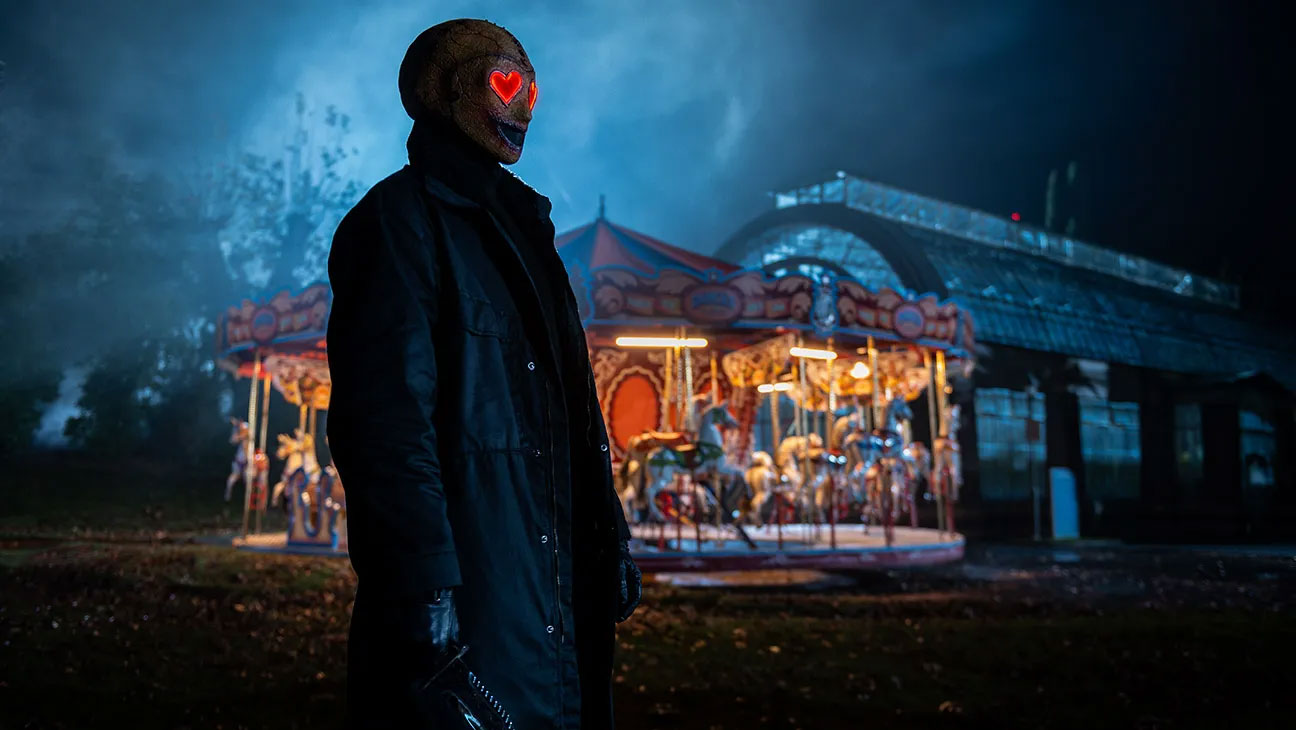
In this alignment, funny characters inhabit a horror universe of blood-soaked silliness. Behavior makes us laugh when it’s rooted in either a sense of audacity or a lack of self-awareness that leave the characters’ interiority misaligned with their realities. The Valentine’s Day rom-com bloodbath Heart Eyes features both an un-self-aware heroine, Ally (Olivia Holt), and her audacious love interest, Jay (Mason Gooding). The lovebirds at the center of this sweet-natured slasher flirt and volley and deny their feelings before coming to terms with their neuroses and falling into each other’s arms – all while battling a masked serial killer. But Heart Eyes doesn’t just make us laugh through the interplay of funny characters.
The entire world of the movie is designed for maximum comedy. The deaths are played for camp-fueled laughs: consider the film’s opening kill in which a victim’s eyeballs are squeezed out of her skull thanks to a winery grape press, or the Friday the 13th-style hilarity of a horndog couple getting stabbed just as they reach a moaning climax. Perhaps the clearest signpost that a horror universe is designed to tickle us more than thrill us: despite the high body count, the movie feels like comfort food. Since it’s chicken soup for the psycho’s soul, the movie does not violate our sense of justice. The good guys win, the bad guys lose, and the assholes and dummies (like the self-absorbed couple in the cold open) get the sharp end of the killer’s blade.
Other examples: Send Help, The Blackening, the Final Destination franchise
Comedic Characters in Dark Worlds: Humor Inside a Horrific Universe
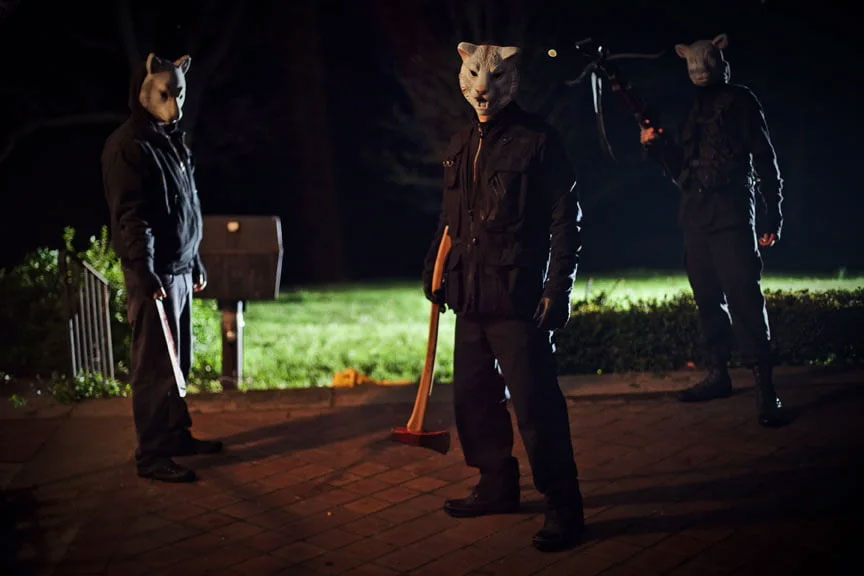
Going one shade darker, this lane of horror-comedy still features funny people – but this time they’re trapped in worlds with dark atmospheres and darker outcomes. The characters of Weapons exhibit humorous behavioral tics that paint them as quirky and relatable: consider the endearing awkwardness between Justine (Julia Garner) and her ex Paul (Alden Ehrenreich), or the bizarre specificity of Principal Marcus (Benedict Wong) and his husband Terry (Clayton Ferris) eating a surplus of hot dogs at home.
Director Zach Cregger comes from a sketch comedy background, but, similar to Jordan Peele, he uses comedy to ground his characters and render them true-to-life, in stark contrast to the fantastical events that befall them. Though some of the violence in Weapons is played for laughs (like the gruesome carrot-peeler-to-the-cheek moment), most of the actual story feels dark – so dark that audiences interpret its central themes as tackling everything from child abuse to school violence.
The humorous elements could almost “lift out” without damaging the film’s sinister core. The people might be funny, but their good-natured humor is no match for the ominous floating assault rifle in the sky. Social satires like Bodies Bodies Bodies or The Menu also fall under this category: ridiculous behavior reveals dark truths about human nature.
Other examples: Scream, You’re Next, Get Out
Horrific Behavior, Comedic Universe: When Darkness Becomes Absurd
This configuration is arguably the most tantalizing blend of horror and comedy, as it depicts a dark story with dark characters – yet the net effect of the film boasts arch shades of comedy that will leave audiences either howling or disturbed, depending on their mileage. James Wan’s Malignant is a prime example of this tonal high-wire act. It’s a tale of a traumatized woman (Madison Mitchell) experiencing visions of a deadly specter named Gabriel that unfolds as a moody slow-burn mystery punctuated by strange moments of camp. Only its insistent score by Joseph Bishara, who deploys an excitable bevy of synth stabs, hints at the true weirdness that lurks at the heart of the movie’s secrets.
In Malignant, the darker the movie gets, the funnier it gets. The horror and comedy are not disparate threads running parallel to each other; they’re tightly braided. Horror-comedies in this lane thrive on audacity, extremity, and mayhem. Every descent into madness inspires both genuine chills and incredulous “WTF?!” laughter.
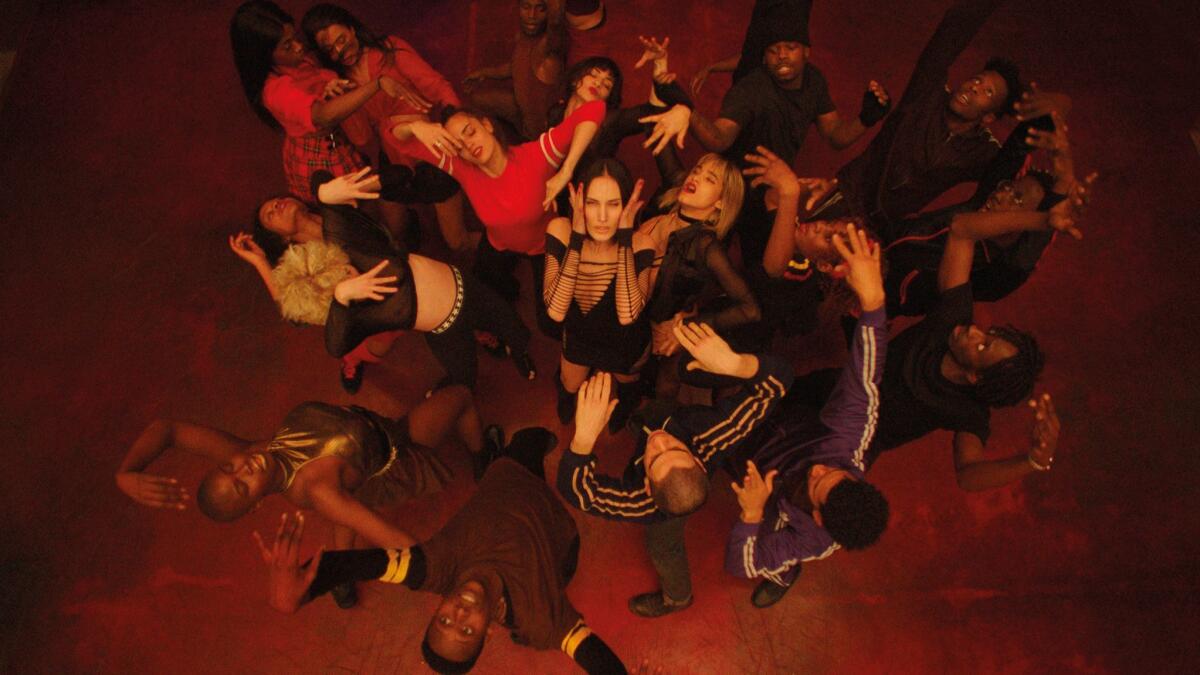
Other examples: Possession, American Psycho, Climax
Why Horror-Comedy Works: Blending Laughs and Screams
These configurations are by no means exhaustive, especially as horror-comedy continues its box office dominance. Just as there exist infinite ways for a movie monster to slice and dice its hapless victims, creators of horror-comedy have found – and will continue to find – infinite ways to blend a laugh with a scream. But in dissecting a film in this hybrid genre through the lenses of character behavior, the events that behavior generates, and the grand vision of the world ultimately presented, we can confront the ever-tantalizing mystery of why a horror-comedy makes us howl with laughter, or terror.